Scotts Run, West Virginia (1935 photographs) (October 1935)
Scotts Run, a string of coal camps near Morgantown, West Virginia, was where Ben Shahn's first long photographic trip for the Resettlement Administration began in October 1935. His pictures of miners' children, men on a Sunday street corner, relief lines and shanty housing record a place that had already become a national emblem of Depression poverty, and two years later he turned one of his Scotts Run photographs into a painting now at the Whitney Museum of American Art.
- Date
- October 1935
- Place
- Scotts Run, Cass District, Monongalia County, West Virginia, a few miles from Morgantown
- Medium
- 35mm nitrate negatives
- Collection
- Library of Congress, FSA/OWI Collection, LOT 1721; main frame LC-USF33-006134-M4, digital file LC-DIG-fsa-8a16670
- Related painting
- Scotts Run, West Virginia, 1937, tempera on paper mounted on wood, Whitney Museum of American Art (38.11)
- Also known as
- Children of coal miners, Sunbeam Mines, Scotts Run; Sunday in Scotts Run, West Virginia; Scott's Run miners' children
Where Scotts Run is, and why it mattered
Scotts Run is a stream valley in the Cass District of Monongalia County, a few miles from Morgantown, on the Pittsburgh coal seam of the Fairmont field. From 1917 to 1932 at least sixty mines operated there, with the boom peaking in 1923. The work drew European immigrants and African American miners, each of whom made up about 13 percent of Cass District's population by 1930.
When the mines closed or ran only part-time in the Depression, the camps fell into deep poverty. The American Friends Service Committee and Protestant missionaries arrived in 1931 and federal relief workers in 1933, and Eleanor Roosevelt first toured the camps in 1933. Her involvement led to the resettlement of a number of families at the new government community of Arthurdale in Preston County. Conditions there were similar to those in other Appalachian coal towns, but because Scotts Run was easy to reach it drew national attention, and Walker Evans, Marion Post Wolcott and Lewis Hine all photographed there as well.
Where it began
For Shahn, Scotts Run was the first stop. Recalling the autumn 1935 trip, which he made in a Model A Ford, he told an interviewer in 1964: "I went down to a place called Scot's Run and there it began." From there he drove on through the rest of West Virginia, Kentucky and down into the cotton states. The Library of Congress dates his Scotts Run negatives to October 1935.
The miners' children
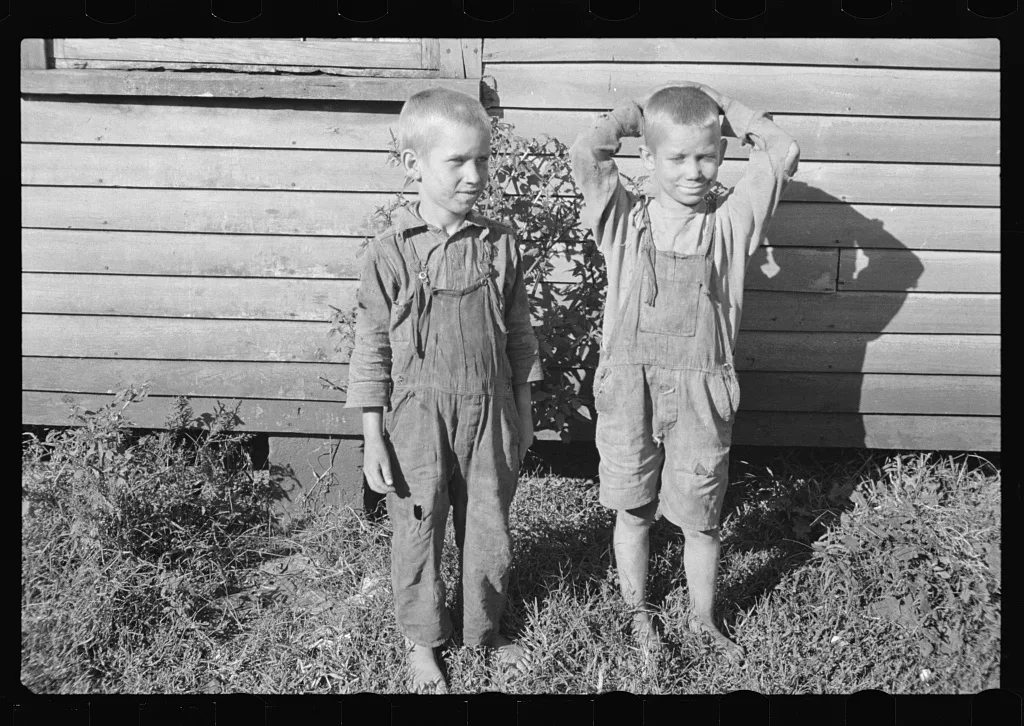
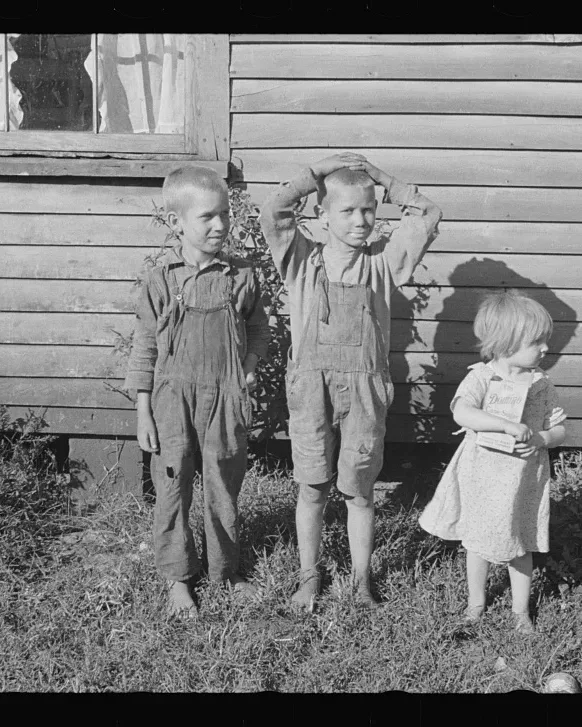
The frame that leads this page is captioned "Children of coal miners at Sunbeam Mines, Scotts Run, West Virginia." Two barefoot boys in worn overalls stand in the grass against the clapboard wall of a house, squinting into strong sunlight. The boy on the right has his hands clasped on top of his head; his shadow falls sharply on the siding behind him. In a second frame from the same moment, captioned "Children of coal miners, Sunbeam Mines," Shahn stepped back to include a small girl holding a paper or book beside them. The children are not named.
What to look for: the low, raking light and hard shadows, the patched and outgrown clothes, and the curtained window in the wider frame.
The rest of the Scotts Run series
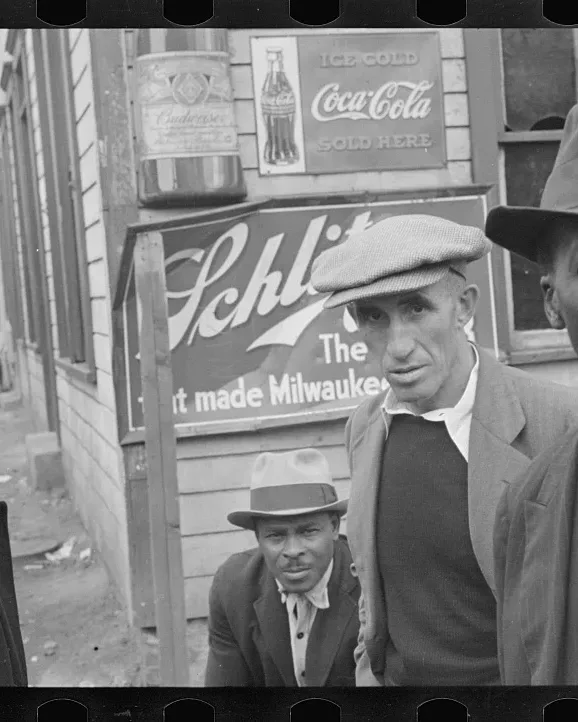
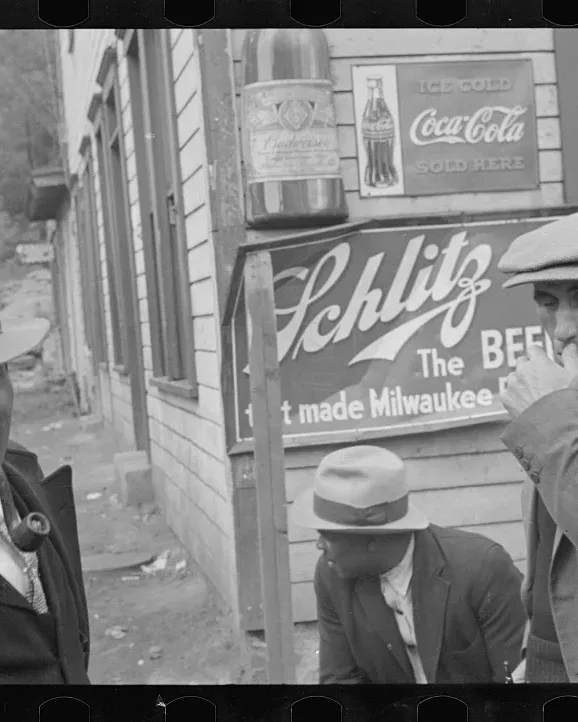
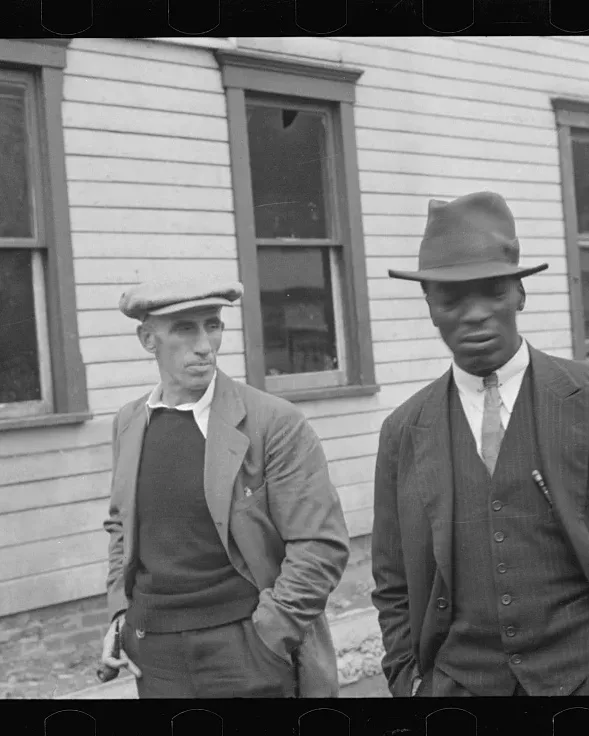
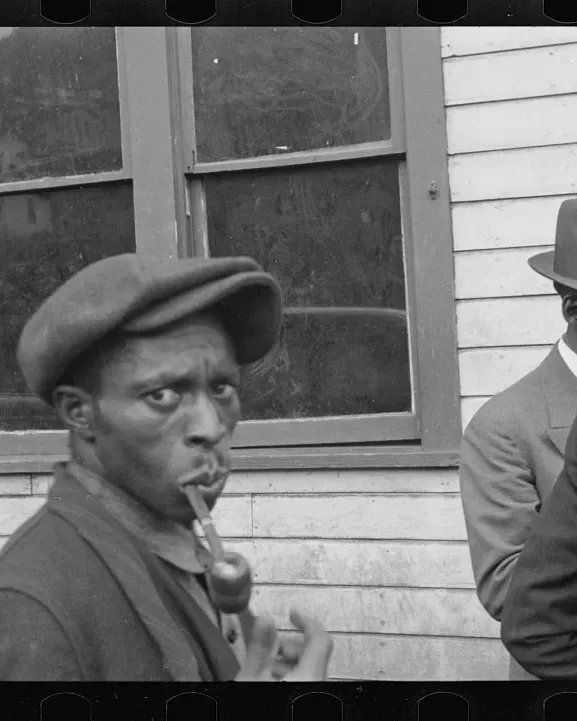
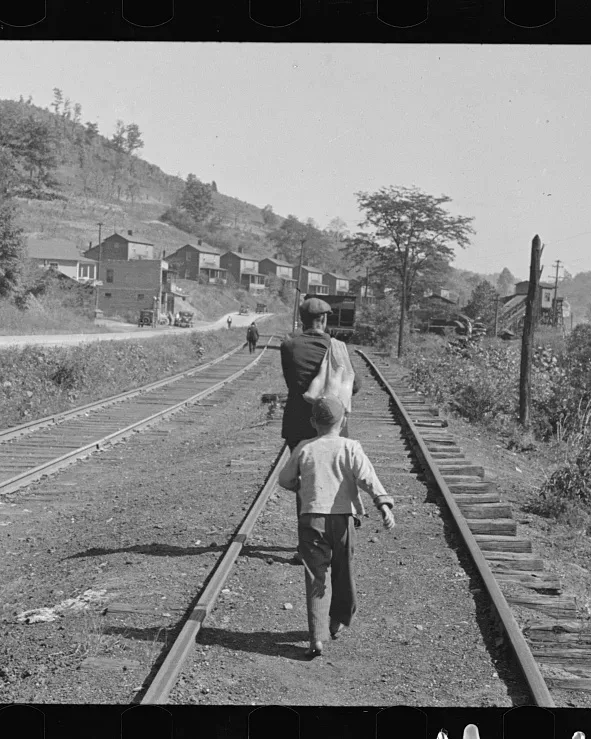
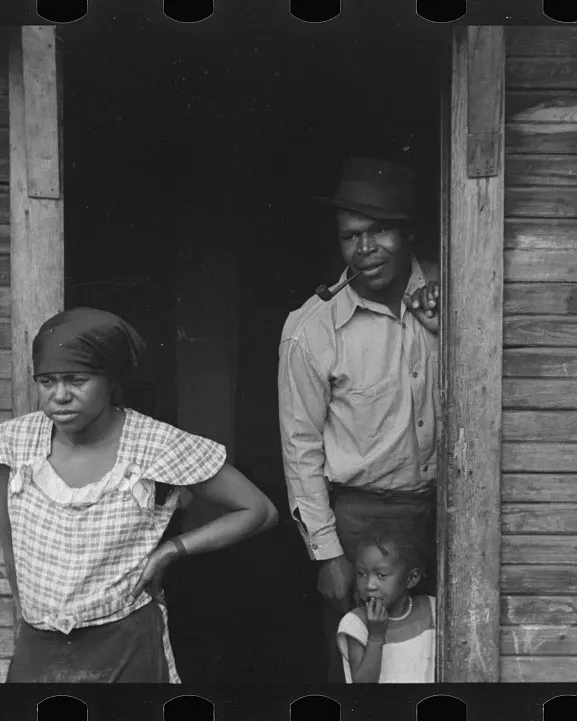
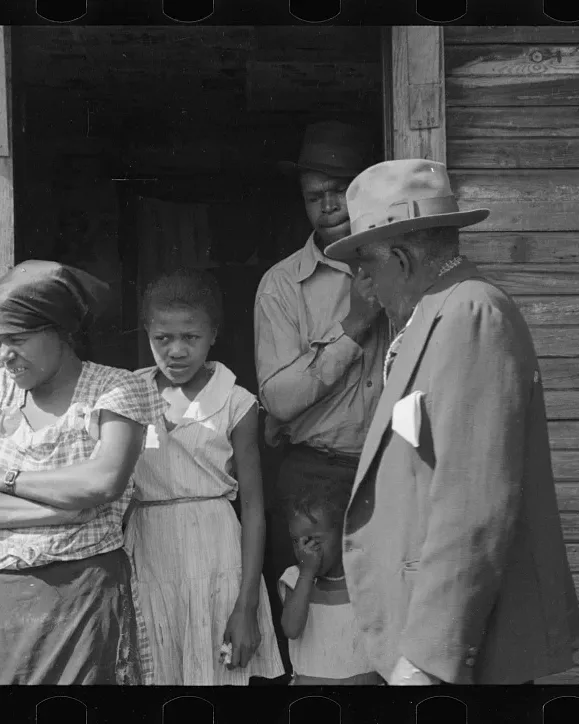
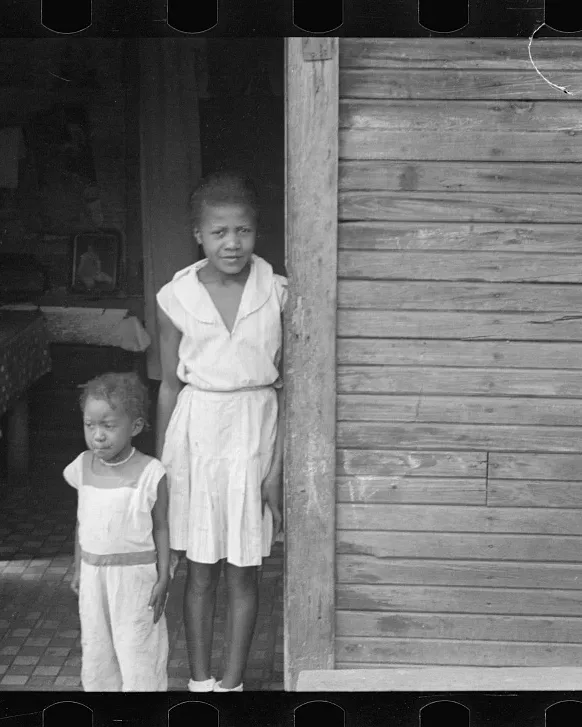
The other negatives widen the picture of the community. "Sunday in Scotts Run" is a close, crowded portrait of four men in hats and caps outside a storefront covered with beer and soft-drink signs, one of them with a pipe in his mouth; Black and white men stand side by side. Other captions record the economy of relief: "Waiting for relief check" and "Scotts Run, West Virginia, walking into town for relief food." Shahn also photographed "The Patch, a shanty town at Cassville," the Pursglove Mine, and a poster for the film Black Fury, which the caption describes as "a movie about a strike." Some captions in this group use the period term "Negro," as in the frames of a family living in a hall at Liberty; that is the caption writer's 1930s wording.
From photograph to painting
Shahn said he did no painting during his Southern trip, but "A lot of paintings came out of it over the years." Scotts Run is the clearest documented case. The Whitney Museum of American Art owns his Scotts Run, West Virginia, dated 1937, tempera on paper mounted on wood, 22 5/8 x 28 1/4 inches, bought by the museum (accession 38.11). It shows men in caps and coats standing by railroad tracks, with a line of houses behind them.
In the museum's audio commentary, curator Adam Weinberg explains that the picture was based on one of Shahn's Scotts Run photographs and that the row of houses was the only thing Shahn added when he translated it into paint. He describes the men as abject and still rather than militant, hemmed in between the train cars and the houses. The Whitney does not identify which negative served as the source, and this archive does not claim that any of the frames it holds is that photograph.
Which photographs this archive holds
This is a series page. Its main image is the Library of Congress negative LC-USF33-006134-M4 (digital file LC-DIG-fsa-8a16670), "Children of coal miners at Sunbeam Mines." The archive also holds the wider frame of the same children, "Sunday in Scotts Run" (LC-USF33-006115-M3) and its related untitled frames, the relief-check and relief-food pictures, The Patch at Cassville, the Pursglove Mine, the Black Fury poster and the Liberty frames. The Library of Congress dates the series to October 1935; the main frame and Sunday in Scotts Run are filed in LOT 1721 of the FSA/OWI Collection.
Other versions in the archive
Children of coal miners, Sunbeam Mines, Scotts Run, West…
1935
Sunday in Scotts Run, West Virginia
1935
[Untitled photo, possibly related to: Sunday in Scotts Run,…
1935
[Untitled photo, possibly related to: Sunday in Scotts Run,…
1935
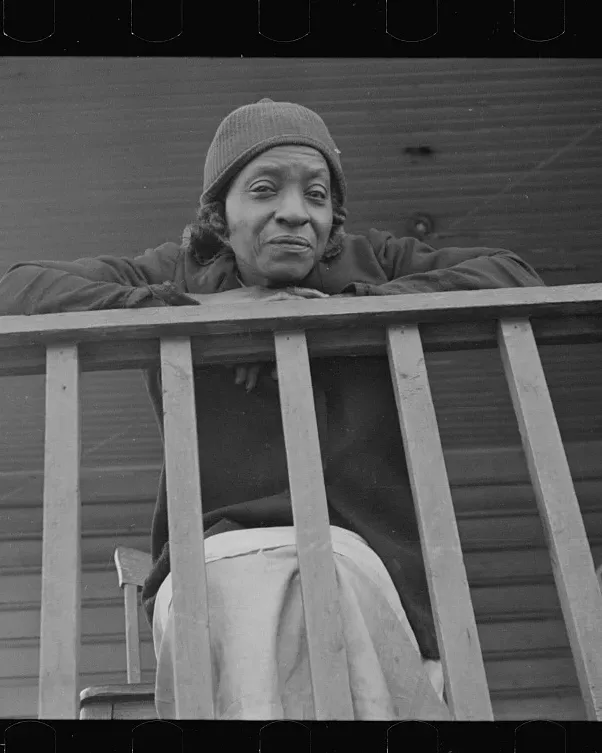
[Untitled photo, possibly related to: Sunday in Scotts Run,…
1935
Waiting for relief check, Scotts Run, West Virginia
1935
Scotts Run, West Virginia, walking into town for relief food
1935
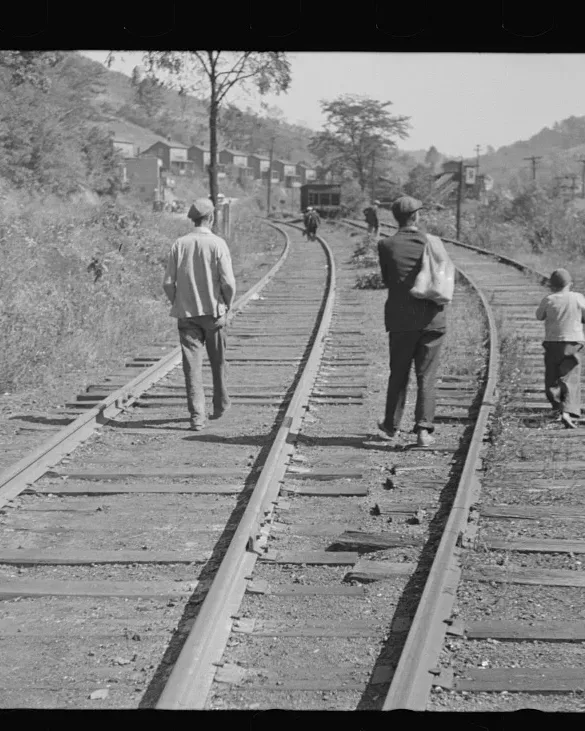
[Untitled photo, possibly related to: Scotts Run, West…
1935
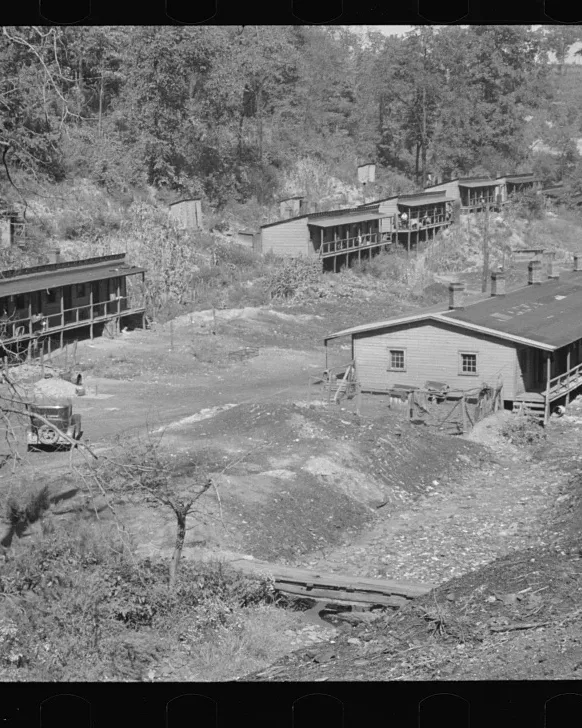
The Patch, a shanty town at Cassville, Scotts Run, West…
1935
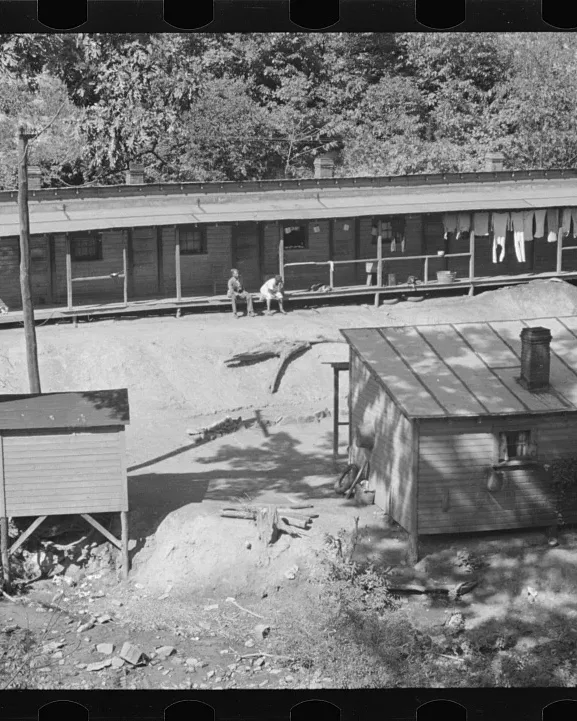
[Untitled photo, possibly related to: The Patch, a shanty…
1935
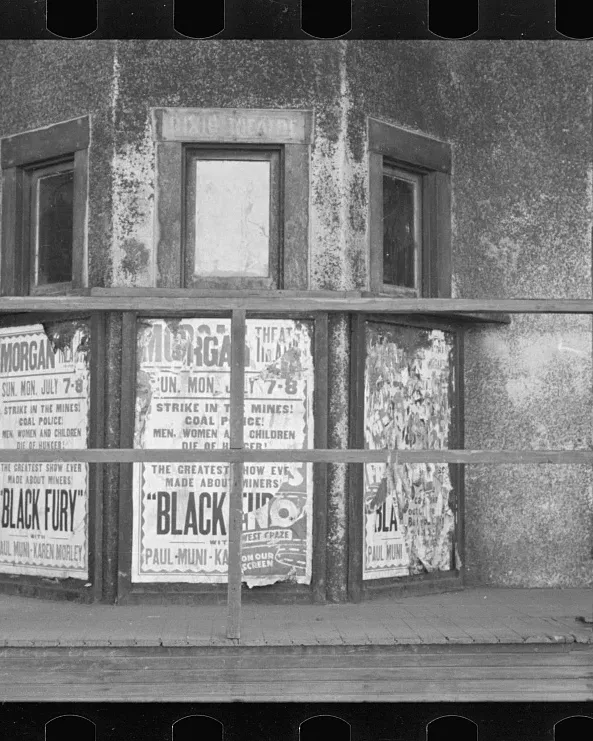
"Black Fury" poster, a movie about a strike, Scotts Run,…
1935
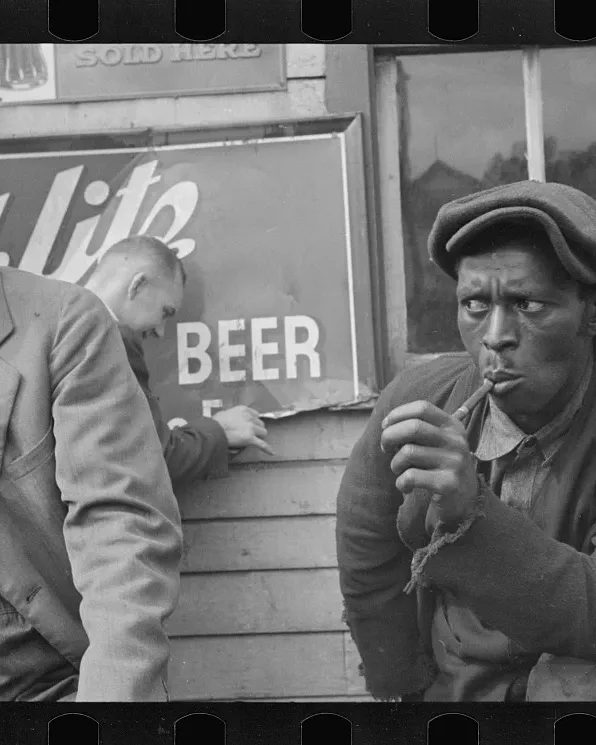
Pursglove Mine, Scotts Run, West Virginia
1935
[Untitled photo, possibly related to: Pursglove Mine,…
1935
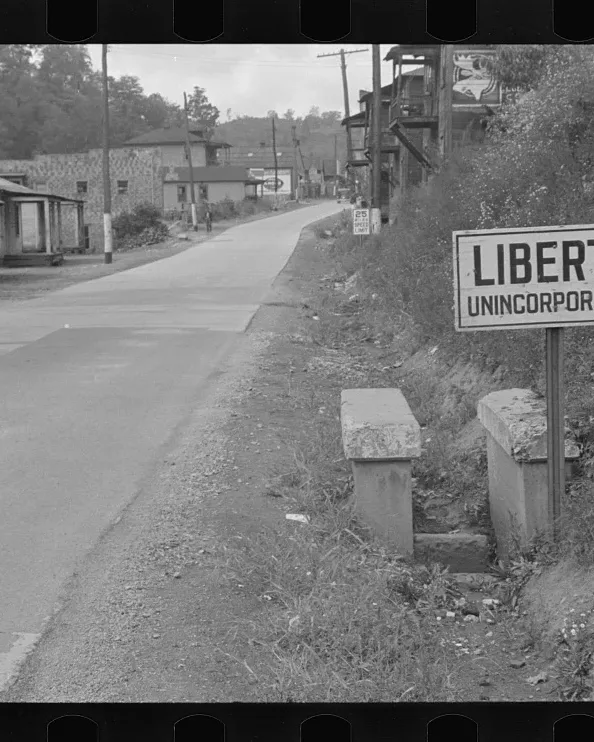
Liberty, unincorporated, Scotts Run, West Virginia
1935
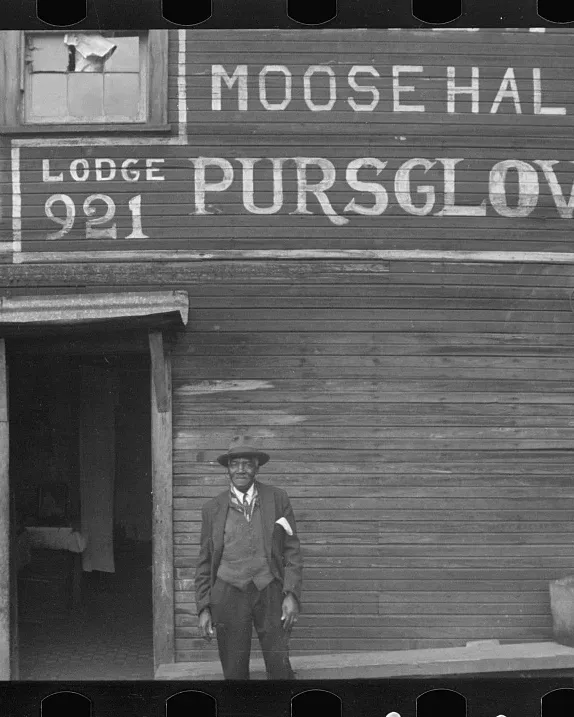
Liberty, unincorporated, Scotts Run, West Virginia. Negro…
1935
Liberty, unincorporated, Scotts Run, West Virginia. Negro…
1935
[Untitled photo, possibly related to: Liberty,…
1935
[Untitled photo, possibly related to: Liberty,…
1935
Frequently asked questions
Where is Scotts Run, West Virginia?
Scotts Run is in the Cass District of Monongalia County, a few miles from Morgantown in north-central West Virginia. It was a string of coal camps along the valley rather than a single town.
Why did Ben Shahn photograph Scotts Run?
Scotts Run had become a national symbol of Depression poverty in the coalfields, visited by relief workers and Eleanor Roosevelt. Shahn began his 1935 Resettlement Administration trip there, recalling later that "there it began."
Did Ben Shahn paint Scotts Run?
Yes. His 1937 tempera Scotts Run, West Virginia, in the Whitney Museum of American Art, is based on one of his own 1935 photographs; according to the Whitney's curator, the houses were the only element he added.
When were the Scotts Run photographs taken?
The Library of Congress dates them to October 1935.
Sources
- Children of coal miners at Sunbeam Mines, Scotts Run, West Virginia (Library of Congress, item 2017730439)
- Sunday in Scotts Run, West Virginia (Library of Congress, item 2017730350)
- Scotts Run, West Virginia (Wikipedia)
- Ben Shahn, Scotts Run, West Virginia, 1937, collection record (Whitney Museum of American Art)
- Ben Shahn, Scott's Run, West Virginia, 1937, audio commentary (Whitney Museum of American Art)
- Interview with Ben Shahn by Richard K. Doud, April 14, 1964, Archives of American Art New Deal and the Arts Project (transcript reprinted by American Suburb X)