Sharecropper on Sunday, Little Rock, Arkansas (October 1935)
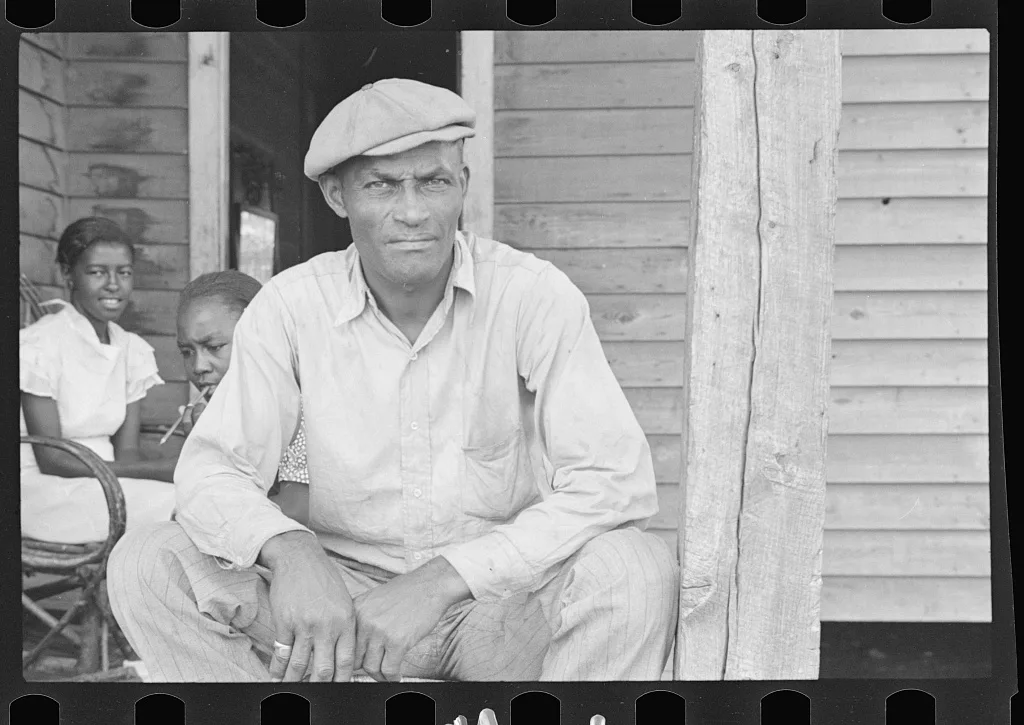
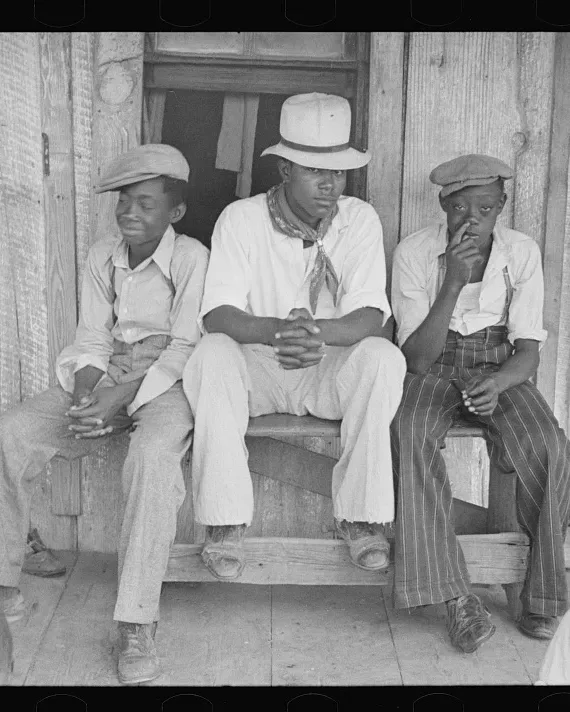
In October 1935, during the same Arkansas visit that produced his cotton-picker pictures, Ben Shahn photographed a Black sharecropping community near Little Rock on a Sunday. Instead of fieldwork, these pictures show people at rest and in their best clothes: a man seated on his porch with family behind him, children gathered at a doorway, and a crowd in front of a church.
- Date
- October 1935
- Place
- Little Rock and nearby, Arkansas (captions vary between "Little Rock" and "near Little Rock")
- Medium
- 35mm nitrate negatives
- Collection
- Library of Congress, FSA/OWI Collection, LOT 1657; main frame LC-USF33-006026-M1, digital file LC-DIG-fsa-8a16179
- People
- Names not recorded in the captions
- Also known as
- Sunday in Little Rock, Arkansas; Sharecroppers' children on Sunday, near Little Rock, Arkansas; Ben Shahn Sunday sharecroppers series
A Sunday series
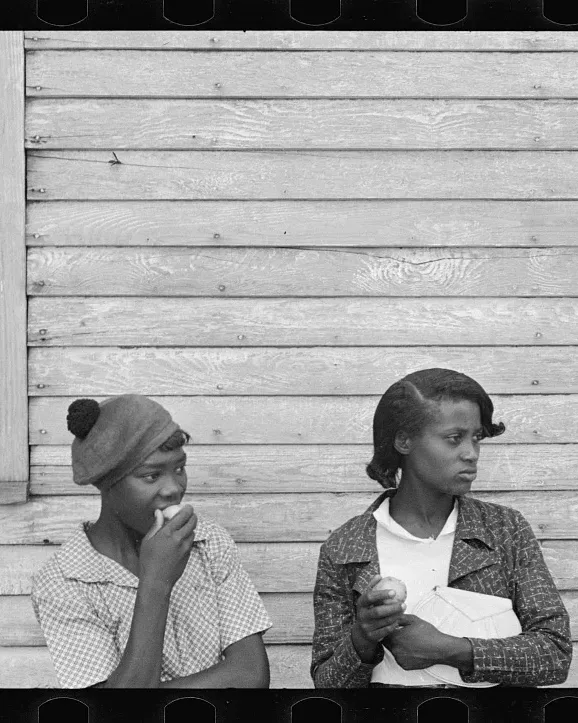
The Library of Congress files these negatives in the same lot, LOT 1657, as Shahn's Pulaski County cotton series, and dates them all to October 1935. Their captions mark them as a set made on a day off: "Sunday in Little Rock, Arkansas," "Sharecroppers' children on Sunday, near Little Rock," "In front of church on Sunday, Little Rock" and "Sharecropper on Sunday, Little Rock." Where the cotton pictures follow a crew through a working day, these show the same rural world dressed up, at home and at church.
The frame captioned "Sunday in Little Rock, Arkansas" shows the setting. Women and girls in light summer dresses and hats gather on and around the wooden steps of a white clapboard building, some talking, some waiting, while small children wander in the dusty yard. One windowpane is patched, the siding is weathered, and the trees and tall grass behind the building suggest a rural setting, in keeping with the companion captions that place the series near Little Rock.
The man on the porch
The frame that leads this page shows a middle-aged man seated at the edge of a porch, his forearms resting on his knees, wearing a flat cap, a pale shirt and striped trousers. He looks straight into the lens with a level, unsmiling expression. Behind him, out of focus, a young woman in a white dress sits in a wicker chair and smiles, and a child leans in at the edge of the frame. The man is not named on the caption card.
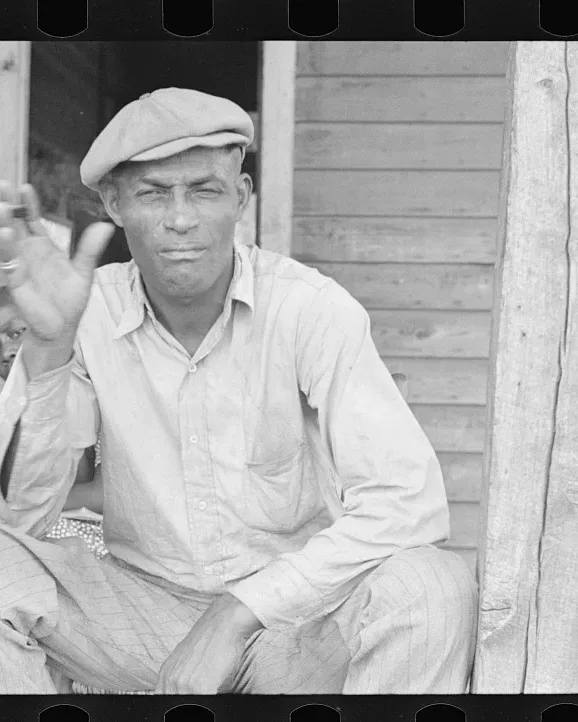
In an essay on these photographs for the website Picturing Black History, the historian Alex Lichtenstein describes other frames from the same sitting, including one in which the man gestures with a cigarette as though telling a story, and another of a young woman behind him who appears to be writing or calculating.
Children in their Sunday clothes
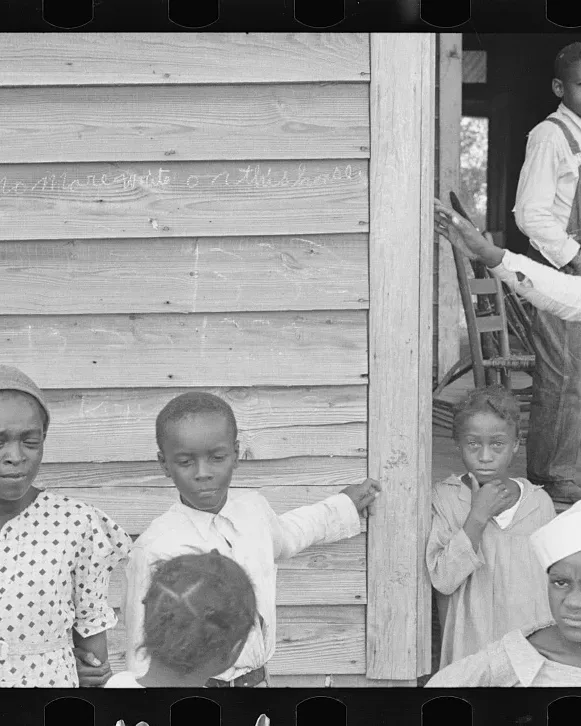
In "Sharecroppers' children on Sunday, near Little Rock," a group of children fills the frame in front of a clapboard house and its open doorway. A girl in a polka-dot dress and knit cap stands at left; a boy in a white shirt rests his hand on the corner post; an older boy in a cap leans on the door frame with one arm outstretched; another stands inside the doorway in overalls; and a small girl in a white cap looks up at the camera from the bottom of the frame. Faint chalk writing is visible on the siding.
Lichtenstein notes that one of the children looks openly impatient with the photographer, a reminder that these were people being interrupted on their day off, not posed models.
Why these pictures stand apart
Much Farm Security Administration photography of the rural South emphasized hardship. Lichtenstein argues that Shahn's Sunday pictures do something different: they show dignity and family pride, and no white overseer or landlord appears in them. He also explains that sharecropping was a family arrangement, in which a household's combined labor was traded for a share of the crop, so that large families were valued and children went into the fields young.
The pictures were made in hard years. The Encyclopedia of Arkansas describes how federal crop-reduction payments mostly went to planters rather than to their tenants, how many tenants were evicted, and how sharecroppers in the northeast of the state formed the interracial Southern Tenant Farmers' Union in 1934. Lichtenstein adds that the changes of the 1930s, wartime jobs and mechanization later pushed many Black farm families off the land, and many joined the Great Migration north.
Captions and which photographs this archive holds
Several captions in this lot use the period terms "Negro" and "colored," for example "Family of Negro sharecropper, Little Rock" and "Colored children of sharecroppers." Those are the 1930s caption writers' words, preserved in the Library of Congress titles; this archive keeps them as the historical record but does not use them in its own text.
This page's main image is negative LC-USF33-006026-M1 (digital file LC-DIG-fsa-8a16179), "Sharecropper on Sunday, Little Rock, Arkansas." The archive also holds the related untitled frame from the same sitting, both "Sharecroppers' children on Sunday" frames (including LC-USF33-006025-M1), the two "Sunday in Little Rock" frames (including LC-USF33-006024-M4) and their related frame, "In front of church on Sunday" and two untitled frames the Library associates with a scene in front of a church. The Library of Congress dates the captioned frames to October 1935.
Other versions in the archive
[Untitled photo, possibly related to: Sharecropper on…
1935
Sharecroppers' children on Sunday, near Little Rock,…
1935
Sharecroppers' children on Sunday, near Little Rock,…
1935
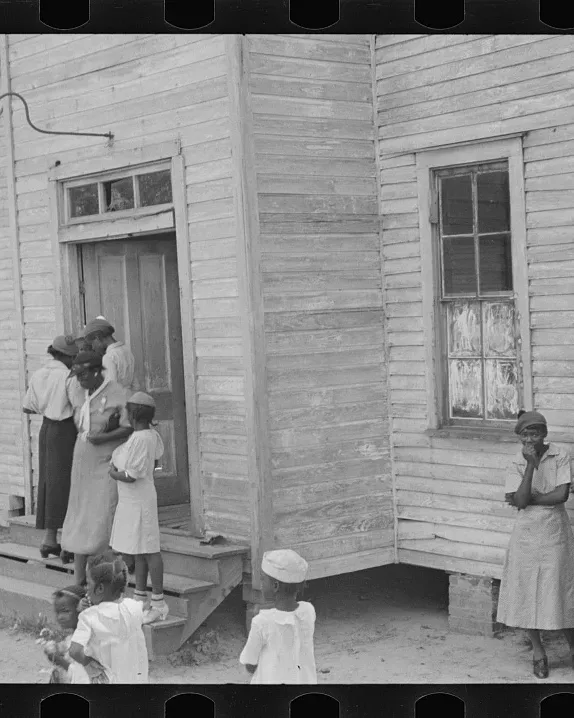
Sunday in Little Rock, Arkansas
1935
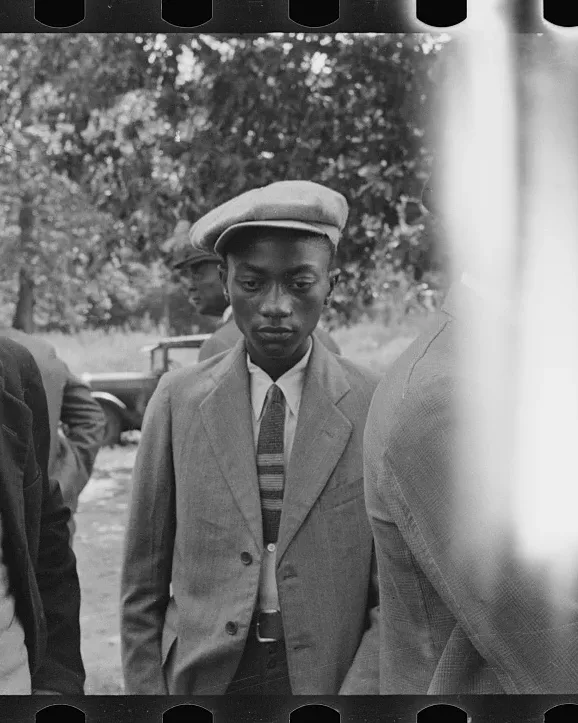
[Untitled photo, possibly related to: Sunday in Little…
1935
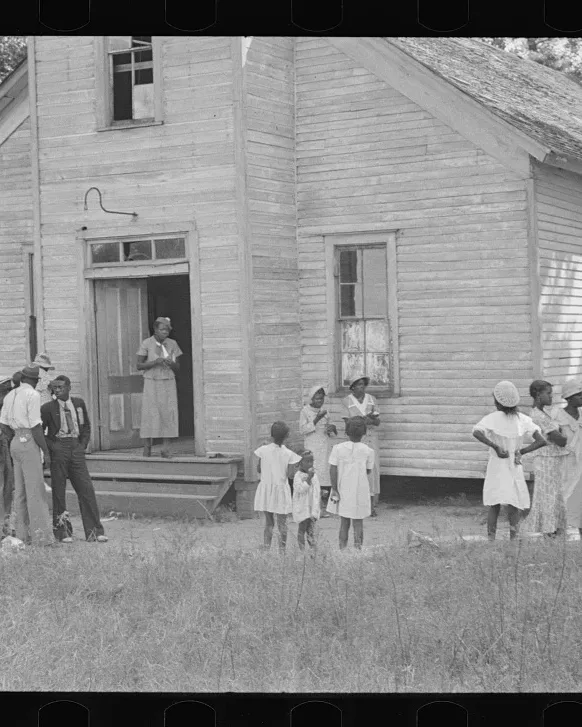
Sunday in Little Rock, Arkansas
1935
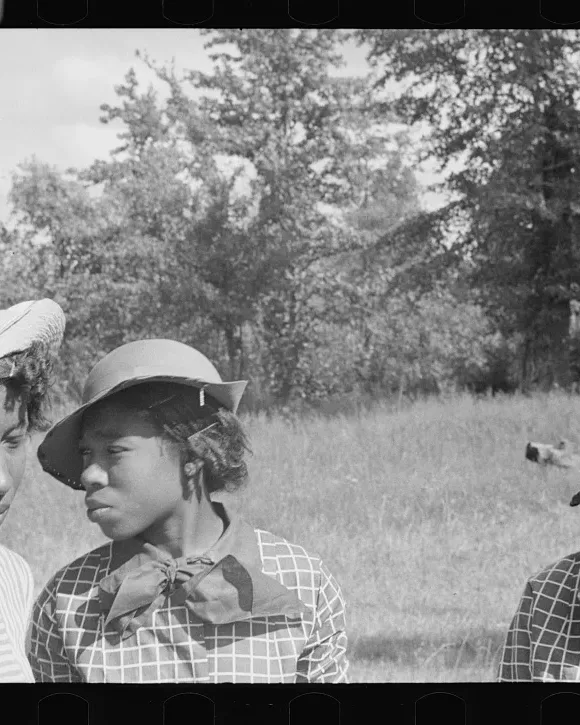
In front of church on Sunday, Little Rock, Arkansas
1935
[Untitled photo, possibly related to: Scene in front of…
1935

[Untitled photo, possibly related to: Scene in front of…
1935
Frequently asked questions
Who is the man in Sharecropper on Sunday, Little Rock?
His name was not recorded. The Library of Congress caption identifies him only as a sharecropper photographed on a Sunday near Little Rock in October 1935.
Did Ben Shahn photograph sharecroppers?
Yes. In October 1935 he photographed cotton pickers in Pulaski County and Black sharecropping families near Little Rock, Arkansas, for the Resettlement Administration.
Why do some captions use words like Negro or colored?
The captions were written in the 1930s and preserve the terms used then. The Library of Congress keeps the original titles as part of the historical record.
What is sharecropping?
A system in which a farm family worked land owned by someone else in exchange for a share of the crop, usually cotton in Arkansas. The whole household's labor counted, so children often worked in the fields.
Sources
- Sharecropper on Sunday, Little Rock, Arkansas (Library of Congress, item 2017729951)
- Sharecroppers' children on Sunday, near Little Rock, Arkansas (Library of Congress, item 2017729946)
- Sunday in Little Rock, Arkansas (Library of Congress, item 2017729944)
- Alex Lichtenstein, A Sharecropper's Family (Picturing Black History)
- Southern Tenant Farmers' Union (CALS Encyclopedia of Arkansas)