Ben Shahn's Most Famous Photographs
Ben Shahn (1898-1969) is remembered mostly as a painter, but between 1935 and 1938 he also worked as a photographer for the federal agency first called the Resettlement Administration and later the Farm Security Administration. Carrying a 35mm Leica fitted with an angle finder, which let him photograph people without seeming to aim at them, he drove through the coal country of West Virginia and Kentucky and the cotton country of Arkansas and the Deep South in the autumn of 1935, and in the summer of 1938 he spent about six weeks photographing farm towns in central Ohio.
The pages below follow the groups of pictures from those trips that are most often reproduced and searched for. Several are series rather than single frames, because Shahn usually shot a run of exposures of the same people and place. Each page explains where and when the photographs were made, who and what they show, what the original captions say (including where those captions use outdated terms), how the pictures relate to Shahn's later paintings where a source documents the link, and exactly which negatives this archive holds.
-
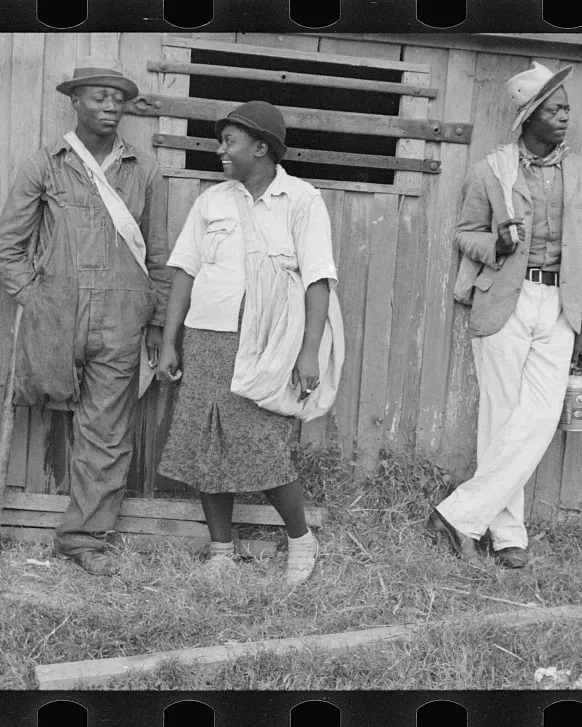
Cotton Pickers, Pulaski County, Arkansas (October 1935)
In October 1935 Ben Shahn spent a day with a crew of cotton pickers on the Alexander plantation in Pulaski County, Arkansas, photographing them from the early-morning start to the weighing-in at the end of the day. The best-known frame shows four young pickers, sacks slung over their shoulders, waiting against a weathered plank wall. The series is one of the clearest records of what cotton work paid in the Depression South.
The story behind it → -
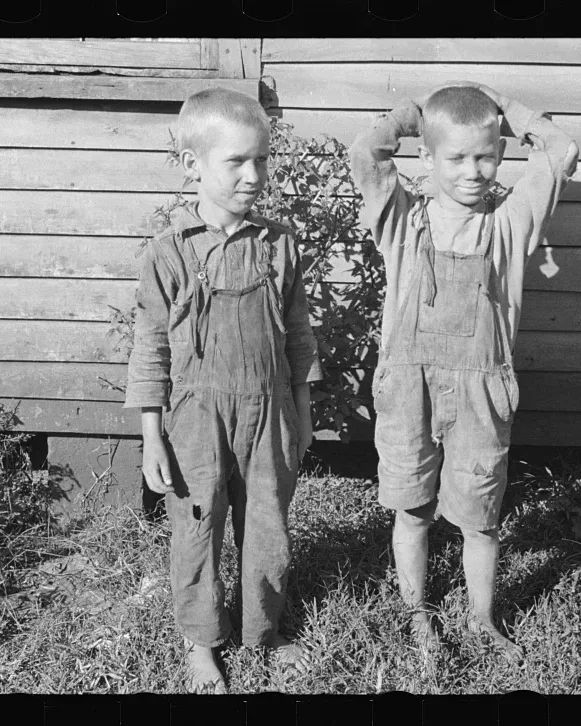
Scotts Run, West Virginia (1935 photographs) (October 1935)
Scotts Run, a string of coal camps near Morgantown, West Virginia, was where Ben Shahn's first long photographic trip for the Resettlement Administration began in October 1935. His pictures of miners' children, men on a Sunday street corner, relief lines and shanty housing record a place that had already become a national emblem of Depression poverty, and two years later he turned one of his Scotts Run photographs into a painting now at the Whitney Museum of American Art.
The story behind it → -
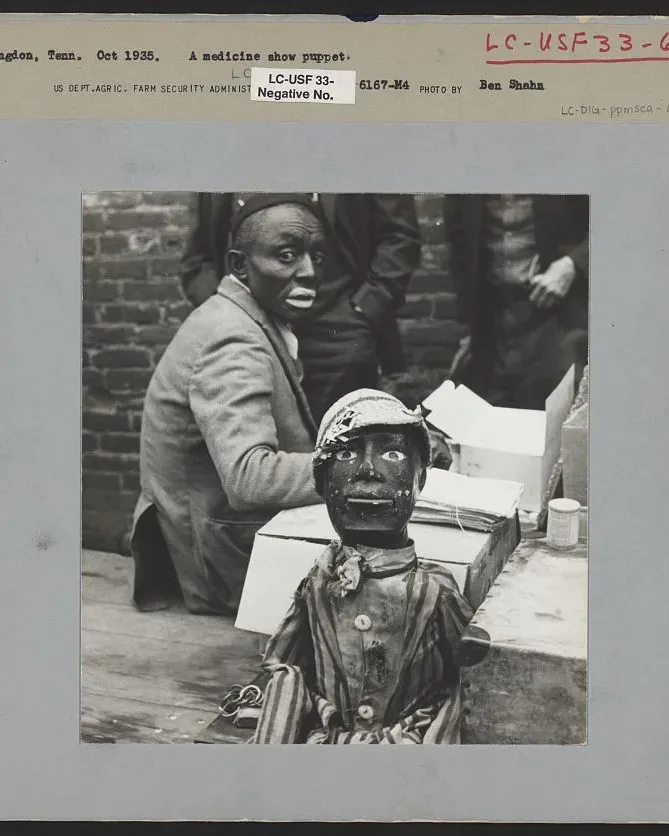
Medicine Show, Huntingdon, Tennessee (October 1935)
On a Saturday in October 1935 Ben Shahn photographed a traveling medicine show in the town square of Huntingdon, Tennessee. The frame in this archive shows a Black performer in minstrel-style makeup seated behind a ventriloquist's dummy carved as a racial caricature. It is a record of one of the last survivals of a nineteenth-century form of entertainment, and of the minstrel conventions that came with it.
The story behind it → -
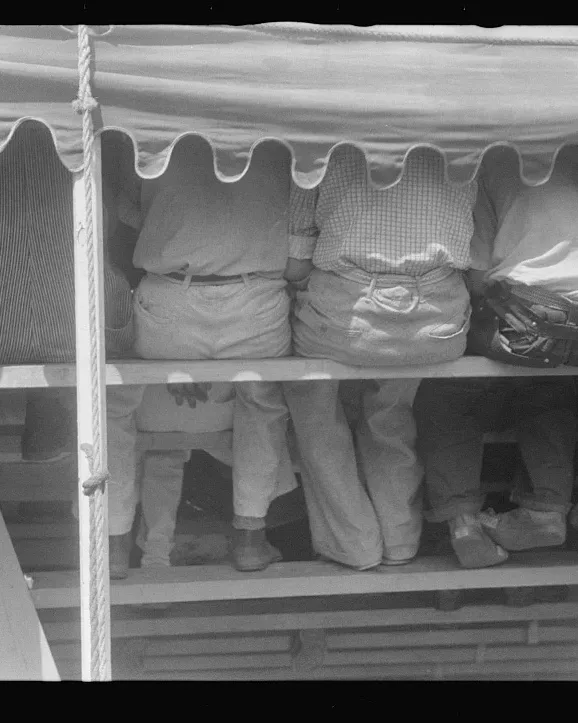
Spectators at Sideshow, County Fair, Central Ohio (Summer 1938)
In the summer of 1938 the Farm Security Administration sent Ben Shahn to central Ohio to photograph the harvest. Among the thousands of frames he made in farm towns and fairgrounds, his pictures of a county fair sideshow stand out: a row of spectators whose heads disappear under a scalloped tent flap, a ticket seller at a stand painted "No 2 Coney Island," and a banner for "Mimi the Hippopotamus Girl."
The story behind it → -
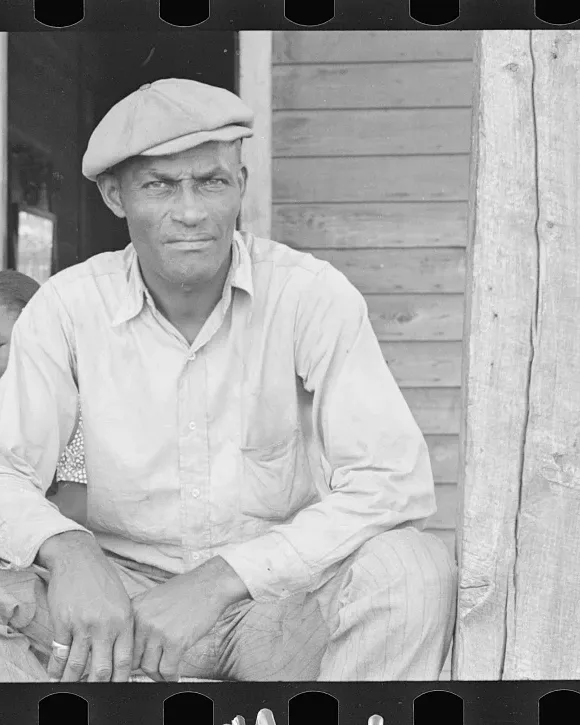
Sharecropper on Sunday, Little Rock, Arkansas (October 1935)
In October 1935, during the same Arkansas visit that produced his cotton-picker pictures, Ben Shahn photographed a Black sharecropping community near Little Rock on a Sunday. Instead of fieldwork, these pictures show people at rest and in their best clothes: a man seated on his porch with family behind him, children gathered at a doorway, and a crowd in front of a church.
The story behind it →